Though has been involved as a constructor of Formula One turbo engines since the debut of their Renault RS01 car in 1977. The Renault Formula One Team would withdraw from the sport, despite winning races, in 1985, only to return in 2000 when it acquired the Benetton Formula team. Settling on their current name in 2016, the Renault Sport Formula One Team soon revealed the Renault R.S.18 car, an F1 challenger of such performance and efficiency that it would continue the team’s upward performance trajectory with Nico Hülkenberg and Carlos Sainz back once again in the driving seats.
Partnering with Bell & Ross, the Formula One team launches the Bell & Ross x Renault Sport Formula One Team Chronograph BR V2-94 R.S.18, with a suffix named for the Team’s third chassis since its return to Formula 1 and dressed in its brand-new black and yellow livery.
Bell & Ross x Renault Sport Formula One Team Chronograph
The R.S.18 is developed jointly by the teams in Enstone, UK, and Viry, France; much like how Bell & Ross watches are the sum of efforts from the best specialist suppliers in watchmaking and so, the Bell & Ross x Renault Sport Formula One Team Chronograph is an allegory of the values and watchmaking philosophy of both brand partners.
A 1.6l turbocharged V6 Renault R.E.18 power unit will power the Renault R.S.18. This power unit has realised a very strong programme on the dyno in Viry-Châtillon to maximise performance and improve reliability in preparation for the reduction to just three internal combustion engines and two MGU-K and energy stores per season. Meanwhile the BR V2-94 R.S.18 chronograph will continue to utilise the workhorse automatic mechanical calibre BR-CAL.301, essentially a high specced ETA 2892 with DD chronograph module.
Limited Edition of 999 pieces, the BR V2-94 R.S.18 Bell & Ross x Renault Sport Formula One Team Chronograph follows the heritage aesthetic of the brand’s Vintage collection.
BR V2-94 R.S.18 Chronograph Price and Spec
Movement: Automatic calibre BR-CAL.301 with 48 hours power reserve
Case: 41mm satin-polished steel with 100 metres water resistance
Strap: Leather
Price: TBA
Widely recognised as a beauty and style icon, Zhao Liying is renowned for her remarkable acting talent and has over 60 million fans on Chinese platform Weibo to validate her stratospheric influence. She was announced as Longines’ new Ambassador of Elegance in 2017 to celebrate the brand’s 185th anniversary. This year, the Chinese actress was invited to attend the 169th edition of the Prix de Diane Longines as well as to present a model from the Record collection.
Zhao Liying Presents The Official Watch of the 169th edition of the Prix de Diane Longines
Prix de Diane – also known as the world’s most important race for fillies, took place on 17th June this year. On this occasion, young jockeys from all over the world assemble at the prestigious Chantilly Racecourse to compete for the Prix Longines Future Racing Stars and the Prix de La Reine Marie-Amélie Longines. This time, the 169th edition of the Prix de Diane Longines witnessed the incredible victory of Laurens ridden by American jockey Patrick McDonald. As the Title Partner, Official Timekeeper and Watch of the event, Longines celebrated Laurens’ remarkable performance by awarding its owner, trainer and jockey with the elegant timepieces.
The awarded timepiece is from The Longines Record, a collection created by Longines solely for featuring chronometers that are dedicated to high-precision timekeeping. The impressive Record models are classic steel watches that is beautifully designed with roman numerals. But other than its dress-to-impress characteristics, the collection is also known to be the first Longines collection that is entirely COSC-certified. Given their high accuracy and classic elegance aesthetic, Longines aims for this collection to be one of the brand’s flagship ranges.
Longines Record_L2.320.0.87.6
Longines Record_L2.821.4.11.6
The equestrian rendezvous concluded successfully with a formal presentation of the timepieces to the race winner and the most elegant female racegoer, Joana Contremoulin, the winner of the “Mademoiselle Diane by Longines” award by Zhao Liying, Longines Ambassador of Elegance.
Let’s face it – Azimut S6 is an alluring craft even when moored! This is the second model in the new S generation sports range from Azimut Yachts, featuring the extensive use of carbon for its construction and representing another milestone in the shipyard’s pioneering research and development work. The combination of Carbon Tech and a propulsion system with three Volvo Penta IPS pods puts the yacht at the forefront of technology in its category, with the ability to achieve unprecedented levels of efficiency combined with peerless handling and silent running. The S6 will be presented as worldwide premiere at the upcoming Cannes Yachting Festival in September 2018.
The little sister of the S7 – recognised as a design icon after featuring in the installation at Milan Design Week last April – is a pure coupé with sporty DNA that looks set to leave its mark in the history of yacht design evolution, offering unprecedented levels of efficiency obtained with the help of the three Volvo Penta IPS propulsion pods and Carbon Tech.
The exteriors designed by Stefano Righini reflect and accentuate the collection’s inborn sportiness. The bow shield on the trapezoid bow and the glazed surfaces in the hull, distinctive features of the S generation, which on this model are even larger and rectangular in shape, give the yacht an immediately recognisable profile and flood the interiors with light, particularly in the owner’s suite.
The silhouette of the yacht is given an even more distinctive look by the big diamond-shaped deckhouse windows, which are built on slightly different planes and have diagonal joints.
Azimut S6’s saloon interiors
Francesco Guida is proud of his second project with Azimut. He has decorated the interiors using a style that draws on a modern and discrete sense of elegance, freshness and refinement. The decor chosen for the launch sets off two different wood varieties, light and dark-coloured oak, against each other and combines them with wooden tops featuring original patterns and glossy finishes, as well as inserts inside shiny chrome-plated steel frames. The result is a welcoming atmosphere bathed in warm colourways. Lighting plays a key role, the combination of traditional lights with the use of extra indirect sources gives the spaces an airier feel.
The lower deck, reached by means of a central stairway, contains a night area made up of three cabins and two heads. The decision to use three Volvo IPS700 engines together with the extensive use of carbon fibre for superstructure, bathing platform, garage and hard top puts the S6 at the forefront of technology in the industry and delivers some major benefits, including fuel consumption efficiency, an area in which the S6 is in a position of leadership in its category, but also vibration, noise reduction. Another benefit of the triple propulsion system, besides a faster acceleration, is that it increases the distance between the external pivoting pods, clearly translating into superior handling response.
The compact engine room frees up space for a huge garage that can contain a 3.3-meter-long hydrojet tender. On the S6 too, Azimut Yachts offer a personalised tender, the PIRELLI J33 – Azimut Special Edition, built especially by Tecnorib.
Mazu Yachts 52 sports the signature Mazu design that is both stylised and masculine. With a lightweight “sandwich” construction that brings rigidity and strength; in addition, tall gunwales embellish the sides, giving the yacht a sturdy profile. Naturally, given the enduring features of the Mazu Yachts 52, it is easy for one to mistake the handsome craft for a navy vessel albeit a designer one.
A Superyacht in Disguise
Similar to Mazu’s Open models, the extended length of the vessel allows for a spacious interior and deck with an addition of a carbon composite hardtop for extra sun protection.
The aft section is wide open with a large sun bed over an enclosed space for a tender at the stern and double tables in the central cockpit area, making the yacht perfect for large groups.
Below decks, the space is fitted across with soft Foglizzo leathers and Bianca marble veneers in the bathrooms. There is a spacious forward master suite and the mid-section saloon offers substantial headroom made possible by the tall profile of the boat. Two more staterooms grace the aft.
“We’ve developed a bigger boat with stylishly sleek and aggressive profile to keep the centre of gravity low for optimal stability and seakeeping, while also offering exceptional comfort and performance,” says Halit Yukay, Mazu CEO and lead designer.
Mazu Yachts 52 is a superyacht chase boat with huge deck spaces suitable for occasions big or small, crowded or personal. The 16-metre vessel also operates independently as a personal yacht like all the other Mazu Yachts models.
Mazu is building the first 52 HT for a client at the Mazu shipyard in Istanbul and will undergo extensive sea trials. The new 52 HT is set to make an international debut at the Cannes Yachting Festival and Monaco Yacht Show this September.
There are many brand sponsorships which pan out to be philosophically head-scratching or literally brand incompatible, but every once in a while, an amazing, groundbreaking work of art is sponsored that shares so much in common with their sponsor that new perspectives of the brand result – case in point: Theo Jansen’s famed Strandbeests, his first Southeast Asian exhibition, now showing at the ArtScience Museum at Marina Bay Sands Singapore.
Fantastic Beests and Where to Find them: Singapore ArtScience Museum
Sponsored by Audemars Piguet, Theo Jansen’s 13 large-scale “beasts”, each with their own unique characteristics have made their way to Singapore’s ArtScience Museum. Jansen’s Strandbeests are a globally acclaimed collection of moving sculptures intricately constructed by everyday objects. These wind-walking beasts take their name from the ingenious set up of turning pivot points and wind activated pneumatic pumps which then provide impulse to the moving “ski-pole” limbs of the Strandbeests in a performance of art and science.
Jansen walks in the footsteps of legendary physicist-artist Leonardo da Vinci, applying scientific principles to a method of madness to create artistic works of self-propelled Strandbeests, utilising nothing but wind power to walk in extraordinary lifelike fashion. What makes this all possible is Jansen’s neural system.
Jansen’s neural system is what a mainspring is to the escapement assortment of a watch. Wings, driven by wind, fill a series of soda bottles with pressure, this pressure is slowly released to pistons which than drive the rest of the levers to provide motion to his Strandbeests. Also, similar to the mainspring, the pressurised bottles also allow Theo Jansen’s famed beach animals (Strandbeests in Dutch) independent motive power (for a period) even when the wind dies down. In essence, it’s a muscle, with the pistons and tubes becoming longer or shorter depending on the valve or “nerve”. The valves are themselves driven by a series of smaller “nerves” – in essence, functioning as simple (aka binary) brains for the beests.
One supposes that our fascination with Da Vinci’s fantastic machines and today, with timepieces like the Royal Oak Double Balance wheel openworked is derived from child-like amusement in the wonders of seemingly alive, independent automatons. In this respect, the perception of luxury watchmaking isn’t simply just about the decorative and artistic value of the handicrafts involved but also, a return to that time when joys were simpler and much easily derived from amusement with just the natural wonders and physics of the universe. But I digress.
“There are few people working today who embody the intersection of art and science as beautifully as Theo Jansen. For nearly 30 years, he has combined his understanding of science, with his artistic skill, to engineer mechanicals animals that appear startlingly alive.” – Honor Harger, Executive Director of ArtScience Museum
Originally designed to combat rising sea levels by roaming the beaches, powered by wind, and then pushing and piling sand on the shore to form protective dunes on the beachhead, the Strandbeests have enjoyed over two decades of experimentation and evolution: so smart are Theo Jansen’s Strandbeests that they are able to adapt to changing environmental conditions, navigating the shore through changing tide direction and anchoring themselves against oncoming storms – key survival features for these delicate beasts.
Presenting – Wind Walkers: Theo Jansen’s Strandbeests
The Wind Walkers exhibit at ArtScience Museum, a first for Theo Jansen’s Strandbeests in Southeast Asia, is an invitation for visitors to get up close with these larger-than-life creatures, driven by everyday items, and experiencing their extraordinary naturalistic movement first hand.
Presented in four sections, Wind Walkers: Theo Jansen’s Strandbeests charts Jansen’s vision from origin to conception while showcasing the science and physics behind the locomotive process of the beasts. It’s a showcase of 13 Strandbeests in Singapore and the films, sketches and prototypes which shed light on how this visionary artist creates these wonders.
Wind Walkers at Singapore Art Museum is an interactive educational activity for all-ages that explore physics, engineering and art. Exhibition opens 23 June 2018. $19 for Adult, $16 for Singapore residents. Seniors enjoy discounted rates of $14 and $12 respectively. Family packages are available for 2 adults and 2 kids at $54 and $45.
Strandbeests in Singapore thanks to Audemars Piguet
Audemars Piguet has always sought to integrate creative vision with superb artistry and technical mastery. The brand has supported Art Basel since 2013 and supported annual projects that give artists the freedom to create works that offer their own, highly personal interpretation of the company’s cultural and geographical origins, emblematic of the brand’s most deeply held values. Audemars Piguet first co-presented Theo Jansen’s Strandbeests at Art Basel 2014 on Miami Beach.
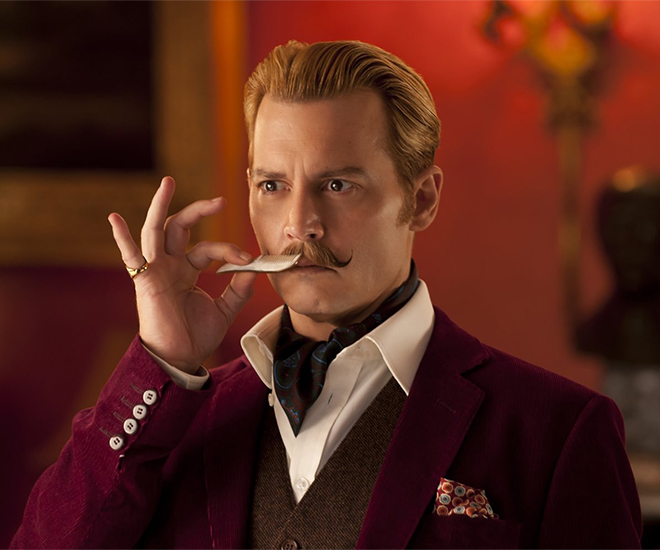
“It’s insulting to say that I spent $30,000 on wine. It’s more,” – Johnny Depp to Rolling Stone
Nominated for 3 Academy Awards, a winner of the Golden Globe Award and Screen Actors Guild Award for Best Actor, Depp made US$650 million from his Pirates of the Caribbean series alone, putting him at 46 of the Forbes 2016 top 100 celebrities list. But, most of it is gone.
$650 million. Gone.
The Financial Troubles of Johnny Depp
Starting with a supporting role in Oliver Stone’s seminal 1986 film, Platoon, Johnny Depp is now considered one of the world’s most bankable film stars. Films featuring Depp have grossed $3.2 billion at the United States box office and over $8 billion worldwide, Pirates contributed to half of those takings.
By 2012, Guinness World Records had listed him as the highest paid actor with earnings of $75 million. In March 2016, Depp suddenly cut ties with his management company, the Management Group,run by his longtime business manager, Joel Mandel, and his brother Robert, accusing them of improperly managing his money. He accused TMG of giving his sister US$7 million without approval and for incurring late payment fines to IRS to the tune of over US$5.6 million as well as earning a profit from investing Depp’s earnings without paying him a commission among other things.
The Management Group later countersued Depp for unpaid fees and damages alleging that Depp had a compulsive spending disorder, burning through US$2-million a month (Editor’s Note: Comparatively, Michael Jackson burned through $1bn across 20 years) and claiming that claiming Depp owed the management company US4.2 million in unpaid loans.
Legal and financial woes aside, the most heartbreaking aspect was that Depp lamented that, “My son had to hear about how his old man lost all his money from kids at school, that’s not right.”
Johnny Depp will playing Anti-virus tech founder John McAfee in the upcoming movie, King of the Jungle.
In Depp Financial Sh!t: By the Numbers
“It was not $3 million to shoot Hunter into the f—king sky. It was $5 million.” – Johnny Depp, taking issue with one of two cited figures in his lawsuit with TMG
The lawsuit against Depp by The Management Group (TMG) cites that the star spent:
$30,000 a month on wines, adding: “Wine is not an investment if you drink it as soon as you buy it.”
$200,000 a month on private planes
$150,000 a month on around-the-clock security
$300,000 a month to maintain a staff of 40 people
$1.2 million to keep a doctor on call
$75 million for 14 residences
$18 million on a yacht
$4 million on a failed record label
$3 million to shoot Hunter S. Thompson’s ashes out of a cannon.
$7,000 to buy his daughter a couch from Keeping Up With the Kardashians
Depp is claiming TMG owes him $25 million in damages and mismanagement and the case centers on the claim that he trusted them to manage his financial affairs and that he was kept clueless until it was too late.